
If your nose runs constantly—dripping, congestion, post-nasal drip, or a stream of tissues that never seems to end—you’re not just dealing with “allergies you have to live with.” A runny nose that lasts for weeks or months, and doesn’t respond to the usual sprays and antihistamines, is a medical condition called chronic rhinitis. And for many people in the Fort Worth area, there’s now a simple in-office procedure that can turn it off at the source.
Dr. John Fewins, a board-certified ear, nose, and throat specialist with more than 25 years of experience in Fort Worth, offers posterior nasal nerve treatment using the Neuromark System—a minimally invasive procedure that quiets the nerve responsible for the constant drip and congestion.
When a runny nose won’t go away
A little congestion during allergy season is normal. But you should consider seeing an ENT if you have:
- A runny or dripping nose most days for more than a few weeks or months
- Constant post-nasal drip, throat clearing, or a lingering cough
- Congestion that sprays, pills, and rinses only partly control—or don’t control at all
- Symptoms whether or not you have known allergies
Chronic rhinitis happens when the nerve at the back of your nose—the posterior nasal nerve—becomes overactive and tells your nose to keep producing mucus and swelling. Treating that nerve directly is what makes this procedure different from another round of medication.
What causes chronic rhinitis?
Chronic rhinitis simply means ongoing irritation and inflammation of the lining of your nose. It comes in two main types, and knowing which you have shapes the conversation:
- Allergic rhinitis is driven by allergy symptoms—your immune system reacting to pollen, dust, pet dander, or mold. It usually brings itching and sneezing along with the runny nose and congestion.
- Nonallergic rhinitis (sometimes called vasomotor rhinitis) causes the same stuffy nose, nasal congestion, and constant drip—but without an allergy behind it. Instead, the nerves and blood vessels in the nasal lining overreact to everyday triggers.
Common triggers for nonallergic rhinitis include changes in weather or temperature, strong odors and airborne irritants, alcohol, and even spicy foods. Whatever the trigger, the result is the same: overactive nerves signal the mucous membranes to keep producing excess mucus, leaving you congested and reaching for tissues.
Here’s why it matters: posterior nasal nerve treatment helps with both allergic and nonallergic chronic rhinitis, because it calms the nerve driving the mucus production rather than chasing one specific allergen. That’s what makes chronic runny nose treatment with Neuromark different from another round of allergy medication.
What is posterior nasal nerve treatment with Neuromark?
It’s a short, in-office procedure that calms the overactive nerve signals driving your symptoms. Using the Neuromark System—a small wand-like device inserted through the nostril, with no incisions on your face—Dr. Fewins gently treats the nerve area with controlled, low-power radiofrequency energy. This dials down the “run” signal so your nose settles down.
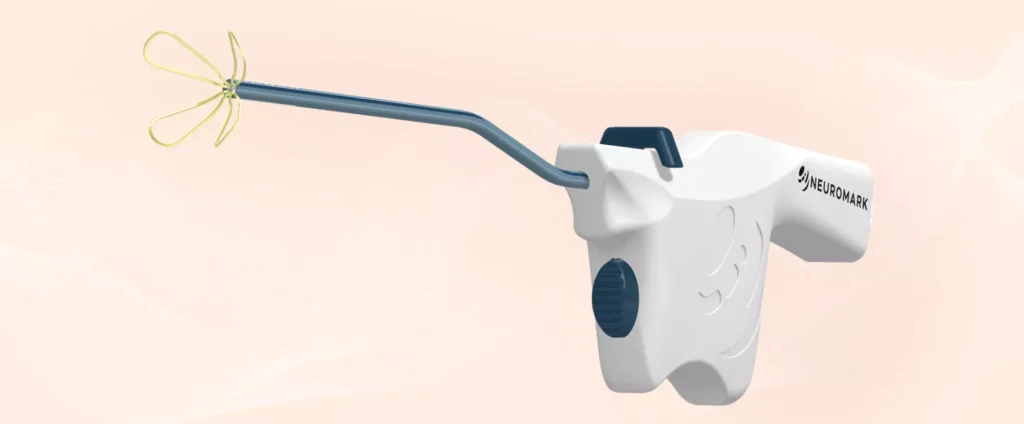
The Neuromark System is FDA-cleared for the treatment of chronic rhinitis. Posterior nasal nerve treatment is recognized as a legitimate option for chronic rhinitis by the American Academy of Otolaryngology–Head and Neck Surgery, the national body for ENT specialists.
Am I a candidate?
You may be a good candidate if you:
- Have had chronic runny nose and/or congestion for at least 6 months
- Haven’t gotten enough relief from nasal sprays, antihistamines, or rinses
- Want an option that treats the cause rather than masking symptoms day after day
The procedure helps patients with both allergic and non-allergic chronic rhinitis. The best way to know if it’s right for you is a simple evaluation with Dr. Fewins.
Treatments you may have already tried
If you’ve lived with a chronic runny nose for a while, you’ve probably worked through the usual options for relieving symptoms:
- Nasal sprays—steroid sprays, antihistamine sprays, and decongestants
- Antihistamines—helpful for allergy symptoms, less so for nonallergic rhinitis
- Nasal saline rinses and nasal irrigation—flushing the nasal cavities to wash out irritants and thin the mucus
These can genuinely help, and for many people they’re enough. But they share one limitation: they manage symptoms day to day without addressing the overactive nerve that keeps the signal switched on. If you’ve been diligent with sprays, antihistamines, and saline rinses and your nose still won’t quit—or you’re simply tired of depending on them—that’s exactly when it’s worth asking whether treating the nerve directly makes sense.
Is your runny nose more than allergies?
A 30-second check. Rate how severe each symptom has been over the past month, then get a next step. Not a diagnosis — a guide to whether it’s worth an evaluation.
Your symptom score: of 15
This self-check is for educational purposes only and is not a medical diagnosis. Only an evaluation with Dr. Fewins can determine what’s causing your symptoms and whether treatment is right for you. Individual results vary.
What happens during the procedure?
It's done right in the office—no hospital, no general anesthesia.
- Your nose is numbed with topical medication so you're comfortable and awake.
- The treatment itself typically takes only about 20–30 minutes.
- Most people drive themselves home and return to normal activities quickly.
Does it actually work?
Yes, for most patients. Neuromark is clinically proven. In the CLARITY clinical study:
- 9 out of 10 patients (91%) achieved a clinically meaningful improvement in their Total Nasal Symptom Score—the combined measure of runny nose, congestion, nasal itching, and sneezing.
- Participants experienced significant reductions in nasal congestion, runny nose, nasal itching, and sneezing.
- No serious adverse events were reported—and none of the intense "ice-cream headache" sensations that can come with some other nerve treatments.
Individual results vary, and outcomes differ from person to person. Dr. Fewins will talk through what you can realistically expect at your evaluation.
How Neuromark compares
Medications can offer temporary relief but don't address the overactive nerves driving your symptoms. Surgery may provide long-term relief but is more invasive with a longer recovery. Neuromark sits in between: minimally invasive, performed in the office under local anesthesia, and aimed at the source of the problem—with the potential for long-term relief.
Why patients choose Dr. Fewins in Fort Worth
- More than 25 years of ENT experience, right here in Fort Worth
- An in-office procedure—convenient, comfortable, and no operating room
- A focus on the nose and sinuses, with treatment tailored to what's actually causing your symptoms
- Conveniently located in central Fort Worth, serving patients across Fort Worth, Arlington, Keller, and the surrounding communities
Frequently asked questions
Is the procedure painful?
Your nose is numbed beforehand with topical medication, so most patients feel pressure rather than pain. Any mild soreness afterward is usually brief.
How long until I see results?
Many patients notice improvement within a few weeks as the nerve activity settles, with continued improvement over the following months.
Will I need to keep using nasal sprays?
Many patients are able to cut back on or stop their rhinitis medications after treatment, though this varies from person to person.
Does it treat allergies?
It doesn't cure allergies, but it calms the runny nose and congestion those allergies trigger—and it also helps non-allergic chronic rhinitis.
Is it covered by insurance?
Coverage varies by plan. Our office can help you check your benefits before scheduling.
Stop living with a runny nose that never quits.
Schedule an evaluation with Dr. Fewins in Fort Worth to find out if Neuromark posterior nasal nerve treatment is right for you.
Call (817) 335-0368 to schedule.
Clinical data: CLARITY study data on file with Neurent Medical; Reh DD, Lay K, Davis G, et al. Long-term outcomes following impedance-controlled radiofrequency ablation for the treatment of chronic rhinitis. Laryngoscope Investig Otolaryngol. 2024;9(3):e1286.
Medically reviewed by John L. Fewins, MD, FACS — board-certified otolaryngologist (ear, nose & throat) with more than 25 years in practice in Fort Worth, Texas. About Dr. Fewins.
Medically reviewed by John L. Fewins, MD, FACS.