
Allergy Testing
Skin prick or blood testing — how we figure out what you're actually allergic to
Both methods find the same thing: which specific allergens (pollen, dust mites, pet dander, mold, and others) your immune system is reacting to. Knowing that turns "I feel awful every spring" into a specific, treatable list — and it's the information immunotherapy is built on, if you decide to pursue it. Here's what each visit involves.
The short version
- Skin prick testing
- In-office, results in ~15–20 minutes, covers the most common allergens.
- Blood (IgE) testing
- A single blood draw, sent to a lab, results in a few days.
- Which one
- Decided at your visit based on symptoms, skin, and medications.
- After testing
- Results guide avoidance strategies and, if appropriate, immunotherapy.
The two methods
Skin prick testing vs. blood testing
Skin Prick Testing
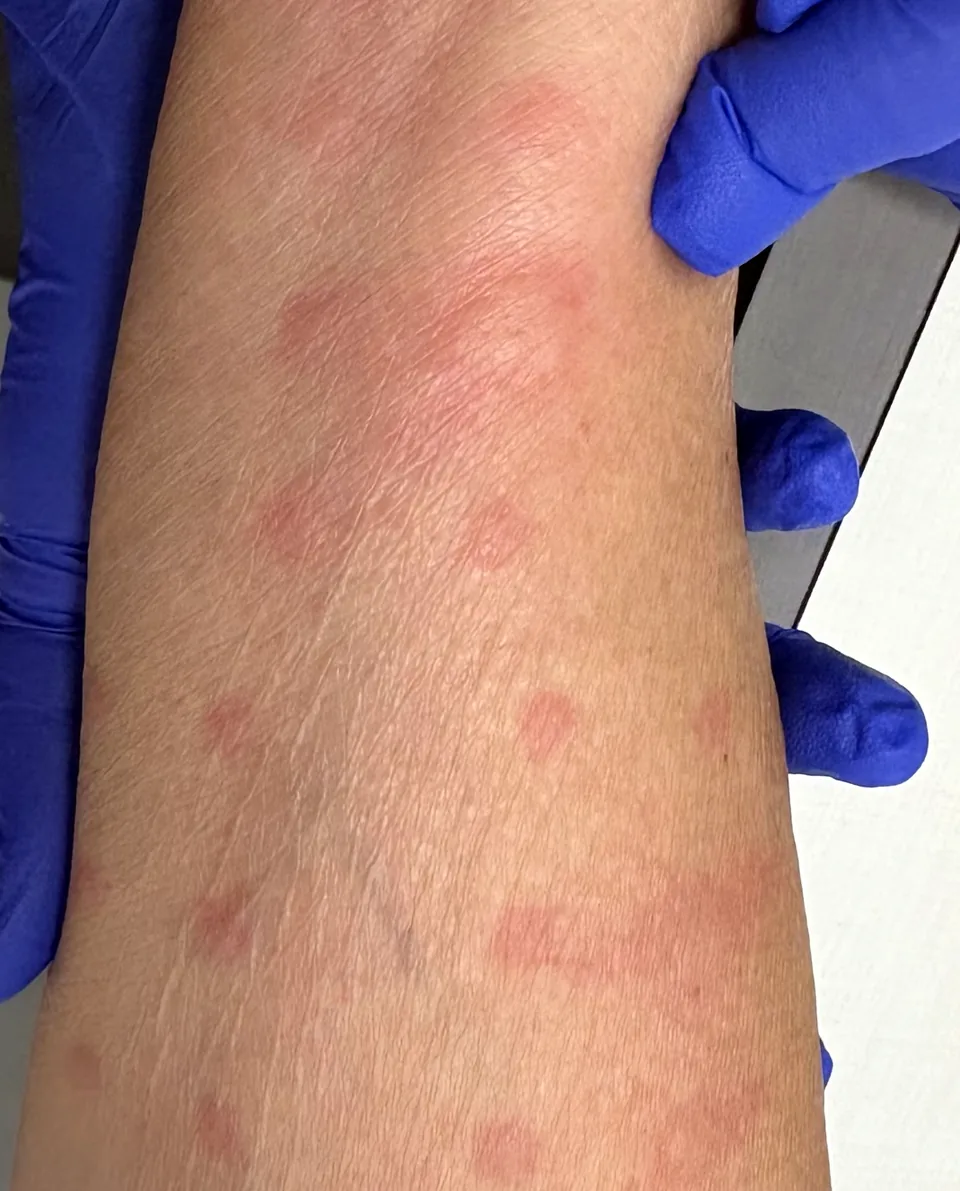
A small drop of allergen extract is placed on the skin (usually the forearm or back), then gently pricked so a tiny amount enters just below the surface — no injection, minimal discomfort for most patients. A panel of common allergens is tested at once.
What to expect:
- Takes about 15–20 minutes for reactions to appear.
- A positive reaction looks like a small raised, itchy bump — similar to a mosquito bite — that fades within an hour or two.
- Certain medications (notably antihistamines) need to be paused beforehand, since they can suppress a reaction and produce a false negative — we'll tell you exactly which ones and for how long.
- Results are available the same visit.
Blood (Specific IgE) Testing
A standard blood draw is sent to a lab, which measures the level of allergen-specific antibodies (IgE) your immune system has produced against each allergen tested. No skin reactions to read and no visit-day medication restrictions.
What to expect:
- One blood draw, similar to routine labwork.
- Results typically take a few days to come back from the lab.
- A good option if you have a skin condition (like eczema) that makes skin testing hard to read, take a medication that can't be safely paused, or would simply rather avoid the skin-prick method.
- Often slightly less sensitive than skin testing for some allergens, which is one reason skin testing remains the more common first choice when it's a good fit.
After your results
What testing tells us, and what happens next
A positive result identifies a real sensitivity — it doesn't automatically mean you need every treatment available. Results are reviewed with you directly, and next steps usually fall into one or more of these:
- Avoidance guidance — practical changes for confirmed allergens (dust mite covers, pet management, pollen-season timing).
- Medication — antihistamines, nasal steroids, or other options matched to what you're reacting to.
- Immunotherapy — drops or shots, for patients who want to address the underlying allergy rather than manage symptoms indefinitely. See our immunotherapy overview.
Dr. John L. Fewins, MD, FACS is a board-certified otolaryngologist serving Fort Worth and the surrounding communities. Individual results vary.