
Head & Neck
A lump in your neck deserves an answer, not a guess.
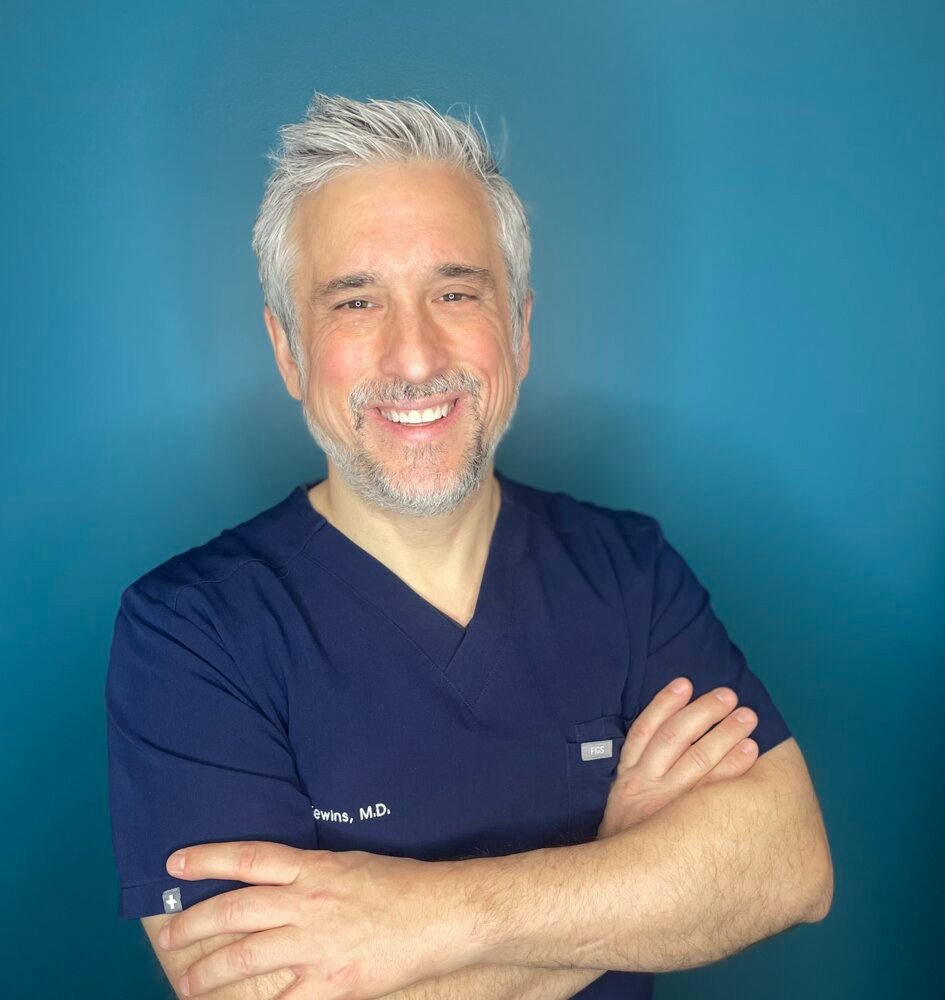
Thyroid nodules, an enlarged parathyroid gland, a swollen lymph node, a blocked salivary gland — several very different problems can all show up the same way: something you or your doctor can feel. Dr. Fewins is board-certified in otolaryngology — head and neck surgery, and the first job in every case is figuring out exactly what you're dealing with before talking about what to do about it.
What's bothering you
Tell us what you're dealing with
A lump found on my thyroid, or my thyroid looks swollen
A nodule found on exam or imaging, or a visibly enlarged gland (goiter).
ParathyroidMy calcium keeps coming back high
Elevated calcium on routine bloodwork, sometimes with fatigue, bone, or kidney symptoms.
Neck massI found a new lump in my neck
A swollen lymph node, a longstanding cyst, or something you haven't noticed before.
Salivary glandPainful swelling near my jaw or under my chin, especially when I eat
Often a blocked salivary duct, sometimes an infection or a growth.
How we think about it
The workup exists to answer the question, not to confirm a guess
A thyroid nodule, a swollen lymph node, and a blocked salivary gland can all present as "a lump you can feel" — but they come from completely different tissue, carry very different degrees of concern, and need different first steps. A neck mass found on exam needs the right workup before anyone assumes what it is.
Where it's coming from
The thyroid, lymph nodes, salivary glands, and soft tissue all sit close together in the neck, and a lump's exact origin often isn't obvious from touch alone — the exam narrows it down, imaging usually confirms it.
What it looks like on imaging
Ultrasound — and occasionally CT — characterizes size, borders, and internal features that raise or lower concern, information a physical exam alone can't fully capture.
Whether tissue needs to be sampled
Many thyroid nodules and neck masses are followed, not biopsied. When a needle biopsy is warranted, it's because specific features on exam or imaging call for it — not as a reflexive next step for every lump.
The clinical picture
Conditions we evaluate and treat
Thyroid Nodules & Goiter
Many adults have a thyroid nodule discovered incidentally — during imaging done for something else, or as a lump you or your doctor notices on exam. The large majority are benign, but evaluation typically involves an ultrasound to characterize the nodule, blood tests to check thyroid function, and, for nodules with certain features, a needle biopsy to confirm what it is before deciding whether to monitor it or treat it. A goiter — overall enlargement of the thyroid gland, with or without distinct nodules — is evaluated the same way; when it grows large enough to affect breathing or swallowing, surgery can become the right option.
Parathyroid Disease
The four parathyroid glands sit behind the thyroid and regulate calcium. When one develops a benign tumor — the usual cause of primary hyperparathyroidism — calcium levels rise, which can cause fatigue, bone loss, or kidney stones, though some patients have no noticeable symptoms beyond an abnormal blood test. Diagnosis starts with bloodwork (calcium and parathyroid hormone levels); if surgery is being considered, imaging such as ultrasound or a sestamibi scan helps locate the overactive gland beforehand.
Neck Mass Evaluation
A new lump in the neck deserves a real evaluation rather than a guess — it could be a lymph node reacting to a recent infection, a cyst that's been there since childhood, an enlarged salivary or thyroid gland, or something that needs closer attention. How long it's been there, whether it's changing, and what other symptoms are present all factor into the workup, which typically starts with an exam and moves to imaging or a biopsy only when the findings call for it.
Salivary Gland Disorders
The major salivary glands — parotid (near the jaw and ear) and submandibular (under the jaw) — can develop stones that block saliva flow, causing painful swelling that often worsens with meals, or infections that need treatment. Less commonly, a gland develops a growth that's usually, though not always, benign. Care ranges from conservative measures for a blocked duct to surgical removal of the gland when a mass needs to come out or blockage keeps recurring.
Frequently asked questions
Is a thyroid nodule usually cancer?
No. Most thyroid nodules are benign. That's exactly why an evaluation matters — ultrasound and, when appropriate, a needle biopsy are how the small minority that need more than monitoring get identified, rather than guessing either way.
Does every neck mass need a biopsy?
No. Many neck masses are followed with an exam and, if needed, imaging first. A biopsy is reserved for masses with specific features that call for one — it isn't an automatic first step.
What's the difference between a goiter and a thyroid nodule?
A goiter is overall enlargement of the thyroid gland. A nodule is a distinct lump within it. A gland can have a goiter, one or more nodules, both, or neither — the distinction affects how it's evaluated.
How is parathyroid disease diagnosed?
Usually with a blood test showing elevated calcium, followed by a parathyroid hormone (PTH) level to confirm the source. If surgery becomes the right option, imaging helps locate the affected gland beforehand.
Will I need surgery?
Not necessarily. Many thyroid nodules, reactive lymph nodes, and minor salivary gland issues are monitored or managed without surgery. Dr. Fewins will walk you through which path fits your specific situation once the workup is complete.
Dr. John L. Fewins, MD, FACS is a board-certified otolaryngologist — head and neck surgeon serving Fort Worth and the surrounding communities. Individual results vary.