
The essentials
Migraine, jaw or dental problems and sinus inflammation can all cause facial discomfort. A sinus procedure helps only when the finding being treated explains the symptoms.
Why the symptoms overlap
Pressure across the forehead or cheeks is often called a sinus headache. Migraine can also cause facial pressure, congestion or watery eyes. Light or sound sensitivity, nausea, and recurring attacks are useful clues, even when the pain does not feel like the familiar idea of a migraine.
Sinus inflammation may produce pressure alongside obstruction, drainage and reduced smell. No single symptom—including pain when bending forward or a change in mucus color—settles the diagnosis.
| What you notice | Why it matters |
|---|---|
| Light sensitivity, nausea or repeated attacks | Can point toward a headache disorder, including migraine. |
| Persistent drainage, reduced smell and nasal blockage | May support a sinus evaluation, interpreted with examination findings. |
| Pain with chewing, jaw tenderness or tooth symptoms | Can warrant dental or jaw-joint assessment. |
What an ENT evaluation can answer
Dr. Fewins asks about timing, location, associated symptoms and prior treatment. Endoscopy and, when indicated, CT help assess whether there is treatable nasal or sinus disease. A normal study can be useful: it helps move the evaluation toward a cause that the appropriate treatment can address.
Minor lining changes on a scan are common and may not explain substantial pain. Dr. Fewins reviews those findings with you rather than treating the wording of the report as the whole diagnosis.
Septal spurs and contact-point headache
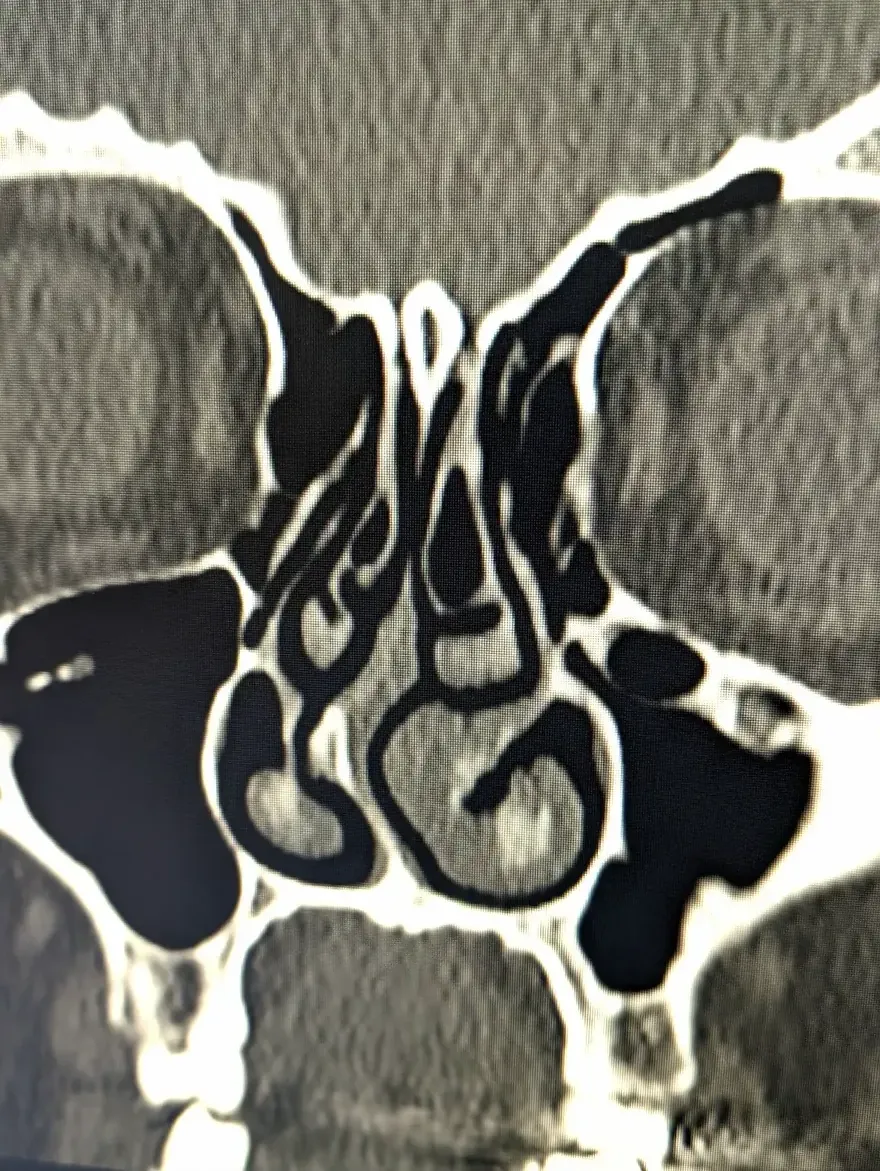
Occasionally, a septal spur, an air-filled middle turbinate called a concha bullosa, or another anatomical contact point may contribute to pain. The finding needs to fit the symptom pattern and examination. Simply seeing contact on a CT does not prove it is the cause.
Other headache causes must be considered. In selected cases, the response to topical anesthesia or other clinical evidence may help clarify the relationship before a procedure is discussed. Treatment is reserved for a convincing clinical picture, with an honest discussion of the chance that pain may persist.
When the answer is outside the sinuses
If the evaluation does not identify a nasal or sinus problem that explains the pain, you still deserve help. Dr. Fewins may discuss a selected headache-medication trial or referral to neurology. Complex migraine management belongs with a clinician who treats headache disorders regularly.
A few notes make the visit more useful
- Where the pain begins and how long an episode lasts.
- Whether you feel well between attacks.
- Light or sound sensitivity, nausea, vision symptoms or jaw pain.
- Nasal symptoms that occur at the same time.
- Medicines tried, how often you take them and the response.
Bring prior imaging when available. If surgery has already been proposed, our second-opinion process can help you understand whether the plan fits the findings.
When to seek urgent help
A sudden severe or unusual headache, new weakness, confusion, vision loss, or fever with a stiff neck needs urgent medical assessment. Do not wait for a routine ENT appointment or an online response.
Medical references
General education complements your individual evaluation.